Subscribe to our newsletter
With our free newsletter, you won't miss any news about Interpoma and the new ipoma Issue 04 Magazine.
Foto credits: T&G
envy™’s sensational success story began around 40 years ago in New Zealand. Today, this club variety is paving the way for a whole new generation of apples.
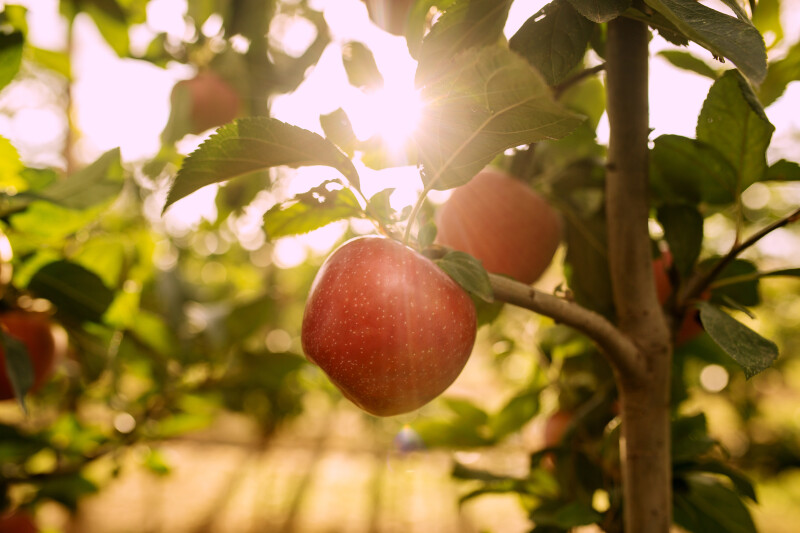
Back in the mid-1980s, New Zealand’s apple industry was in good shape. The local favorites, Braeburn and Gala, were in high demand both at home and abroad. But Allan White from the Department of Scientific & Industrial Research (DSIR) still had concerns and felt the country’s apple market needed to reinvent itself. Although New Zealand enjoyed perfect apple-growing conditions with warm summers and cool winters, he saw clouds gathering on the horizon: southern-hemisphere competitors like Chile, Argentina and South Africa were starting to grow Gala on a large scale, and Braeburn was also popular in Chile. These countries could offer lower production costs and ship apples more quickly to major markets in America and Europe. How could this small island nation south-east of Australia keep up?
The answer, White believed, was to create an apple nobody could resist. So, he set out to develop a game-changing variety: “Scilate”, the apple that would later be sold under the brand name envy™ – and place New Zealand’s apple industry firmly on the world stage.
Foto credits: T&G (Carles Palacio i Berta)
White not only achieved his goal – he exceeded it. envy™ is now present in almost 60 countries and regions across the globe. In Asia, it regularly tops the charts: number one in Vietnam, number two in Thailand, number three in China. Chinese demand alone is expected to jump 27 percent in 2026 compared to last year.
Even in the US, where the market is feeling saturated, envy™ is gaining ground, rising from a 7.2 percent market share in 2023 to 12.4 percent in 2025.
T&G, the New Zealand fruit giant that owns the envy™ license, works with over a thousand growers in 13 countries. In Europe, most production is centered in Italy (exclusively South Tyrol), as well as France, Spain, and, since 2020, Switzerland. Because envy™ is grown in both hemispheres, it is available year-round. T&G invested heavily in this approach – and it paid off. By 2026, global retail sales of envy™ are set to push past the magical one billion New Zealand dollar mark (about €510 million) for the first time. No apple from Aotearoa has ever been so popular.
T&G’s promise is simple: consumers should always get the quality they know, love and expect. But envy™ is more than an apple; it’s an experience, as an Italian TV advert puts it: “Assaggia per credere” – taste it to believe it. It’s clear: every bite is a delight.
envy™’s description reads like poetry: a hint of citrus, followed by tropical flavors of pear, banana, pineapple, and mango. The refreshing acidity softens into a rich sweetness, and its ruby-red skin is brushed with painterly orange and yellow streaks. Even its name, envy™, feels fitting.
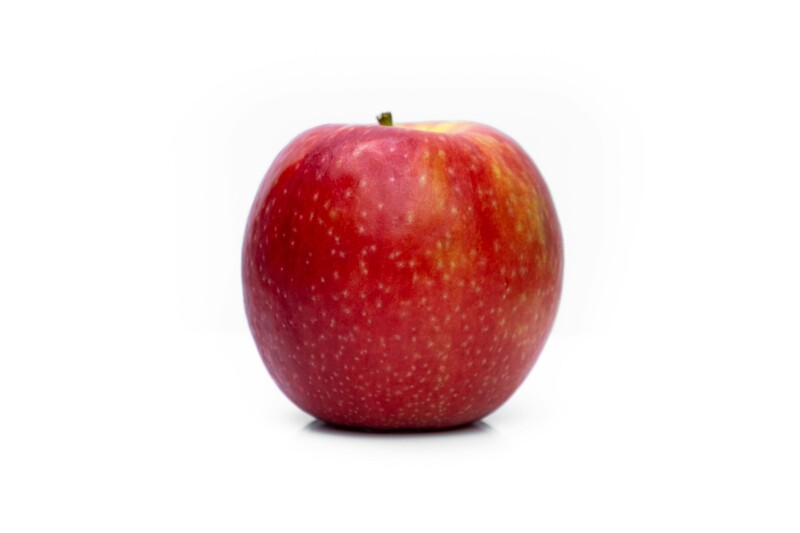
What really sets envy™ apart is its enduring texture. Even six months after harvest, it remains juicy and crunchy – something few other apples can claim. And when cut, the flesh barely oxidizes, so it doesn’t brown easily.
To create this whizzkid, White crossed two of New Zealand’s apple elites: Braeburn and Gala. Both were high-yielding and easy to grow. They were a perfect match, with the stately Braeburn bringing zingy acidity and the modest Gala a gentle sweetness.
White just had to decide whether to pollinate Gala flowers with Braeburn pollen or vice versa. So, he tried both. Out of the 8,000 seeds produced by crossing Gala flowers with Braeburn pollen, 7,000 were sown. After rigorous sorting, 211 seedlings were selected, and finally, envy™ was born.
Foto credits: Unsplash (Amit Lahav)
But the reverse cross was also a winner: with Braeburn as mother and Gala as father, envy™’s apple brother JAZZ™ made it to market in 2004 – a full five years before envy™. The siblings’ formal variety names are “Scilate” (trademarked envyTM) and “Scifresh” (trademarked JAZZ™). “Sci” reflects their origins in DSIR breeding, with the “fresh” in “Scifresh” referring to JAZZ™’s crisp, juicy bite and “late” in “Scilate” signaling envy™’s late harvest in April, the month in which the New Zealand apple season draws to a close.
Taste-wise, JAZZ™ and envy™ are similar. “But JAZZ™ strikes a better balance between sugar and acidity,” says Richard Volz, who succeeded White as DSIR’s head apple breeder in 2001 and watched these two apple superstars rise to fame.
History seems to be repeating itself. Volz is also a visionary with the ability to recognize trends early on. As long as 25 years ago he realized that rising global temperatures would threaten apples worldwide, resulting in softer, paler fruit. “Without cool nights, apples don’t produce enough anthocyanins – the red coloring,” the 67-year-old explains.
So Volz, who also worked for the DSIR’s successor institutes – HortResearch, Plant & Food Research and the Bioeconomy Science Institute – continued where White left off. He picked the very best varieties, crossed them, and set about searching for the needle in the haystack. He put his chances of finding that breakthrough apple at one in ten thousand.
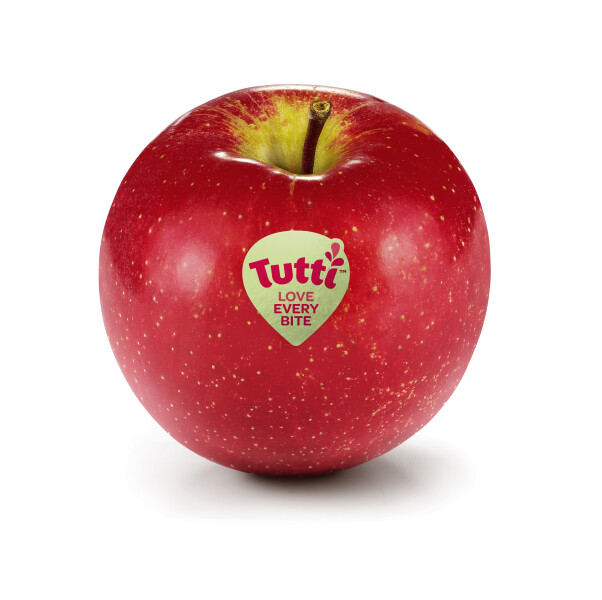
“It’s even harder today,” says Volz. “Standards for new apple varieties have improved in recent decades. These days it’s not enough just to meet the criteria; an apple has to offer something special that sets it apart from others with the same traits.”
Tutti™, as Volz’s own creation is branded, is that rare find. Since the first fruit appeared on the original young plant in 2009, this apple, with the unwieldy variety name “HOT84A1”, has shown it can thrive in temperatures over 40°C.
Like envy™, its success is all in the genes. It has inherited its intense red color from its mother, a variety called “Scired”, and its excellent texture from both parents. Its father is none other than “Scilate” – envy™ itself, which has already revolutionized the apple market. And so it follows in its parents’ footsteps: today’s star is paving the way for the next generation of apples to face the challenges to come.
Text: Bettina Gartner
Foto credits: T&G (Sistema Binari)