Subscribe to our newsletter
With our free newsletter, you won't miss any news about Interpoma and the new ipoma Issue 04 Magazine.
Can an apple orchard help fight the climate crisis? A decade-long study from South Tyrol has delivered a surprisingly positive answer – although not without caveats, as Massimo Tagliavini explains. The Professor of Tree Physiology and Ecology at the Free University of Bozen-Bolzano unpacks what really matters. Three simple questions – three complex answers.
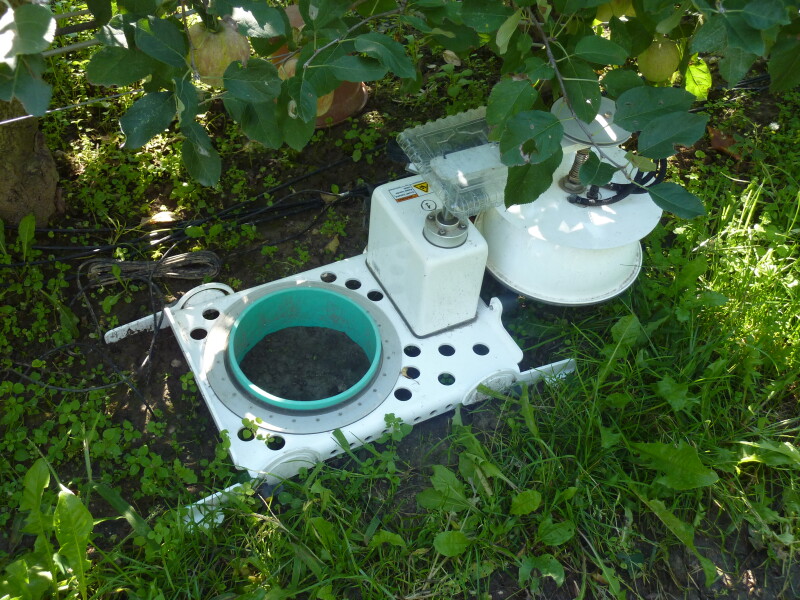
Do apple orchards lock away more CO2 than they release? That was the big question behind Massimo Tagliavini’s research. For ten years, his team tracked carbon flows in a commercial orchard in Kaltern, near Bolzano, measuring exchanges between plants, soil, and the atmosphere. Part-funded by Assomela, Italy’s main apple producers’ association, the study aimed to find out how much apple production is really contributing to climate change. After all, agriculture is both vulnerable to the effects of climate change and is itself a significant source of greenhouse gas emissions, from methane and nitrous oxide to CO2.
What’s more, the global market adds pressure. As Tagliavini notes, European apple growers face increasing competition from producers in places like New Zealand, who promote their apples as having a better carbon footprint. This is forcing the industry to examine its own environmental footprint, with more and more grower associations commissioning carbon footprint assessments.
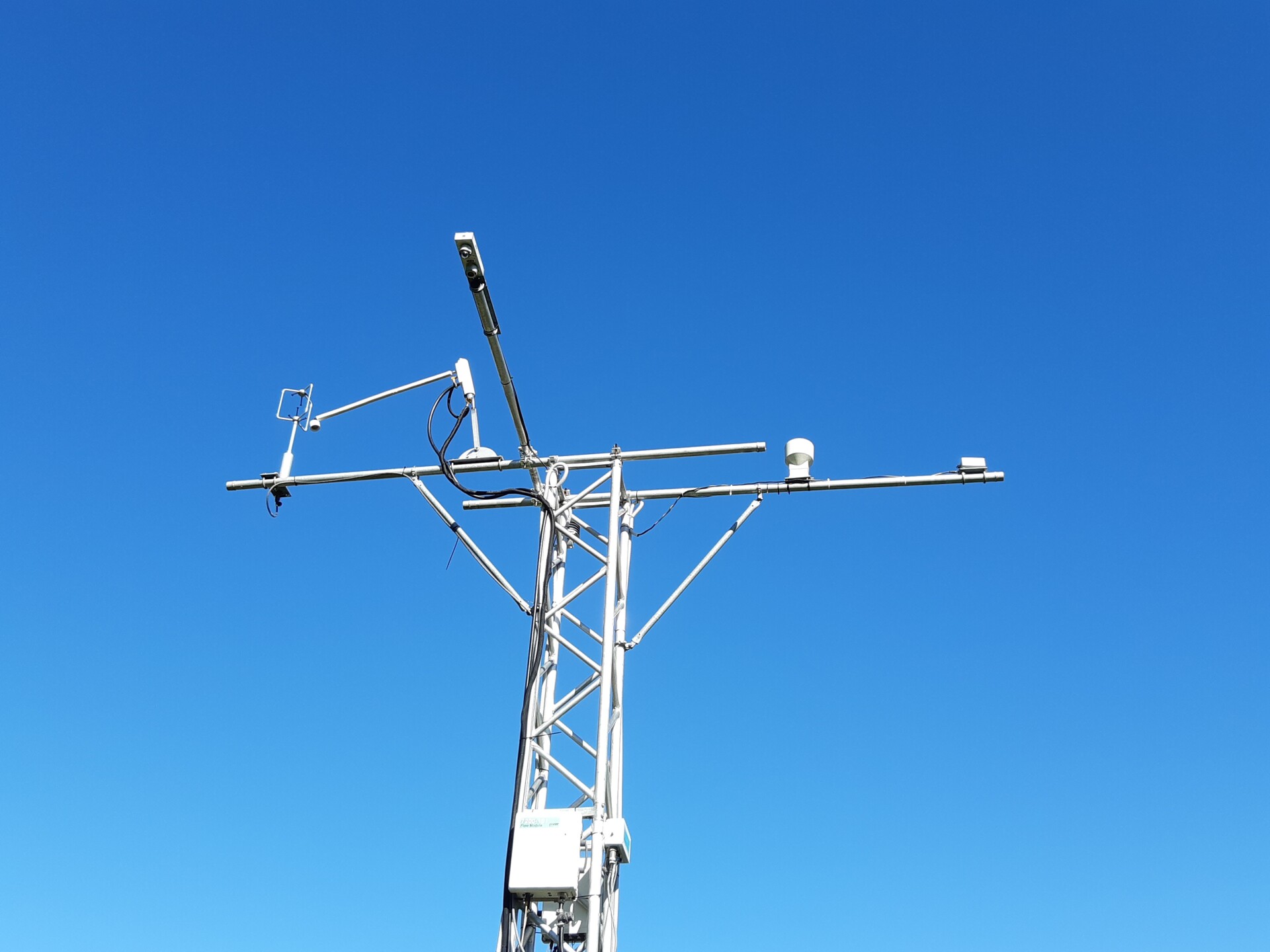
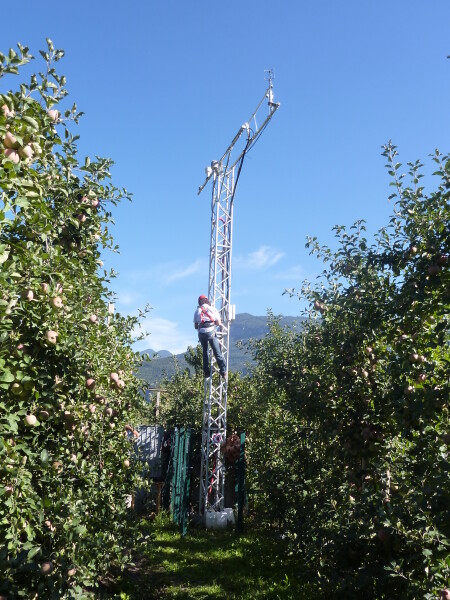
“We use a micrometeorological method called eddy covariance,” says Tagliavini. “We were the first in the world to use this method in an apple orchard to measure the net carbon exchange in the ecosystem.” The researchers set up a flux tower equipped with anemometers to record vertical wind movement between the rows of trees and CO2 concentrations in the air around the trees.
“During the day, photosynthesis captures carbon from the air,” Tagliavini explains. “At night, the flow reverses, as the photosynthesis stops, but the plants and soil microorganisms continue to breathe.” By recording these data continuously for ten years, the team was able to assess the orchard’s net ecosystem exchange – the net flow of CO2 between orchard and atmosphere.
The short answer is: they are carbon sinks. Thanks to photosynthesis, apple trees absorb more carbon from the atmosphere than they release.
To get a full picture, however, we need to consider the orchard’s entire carbon cycle. Some of the carbon absorbed by the orchard leaves the field in the fruit harvested and sold – a so-called lateral carbon flow. “Even when you factor that in, the system remains a net carbon sink,” Tagliavini says.
“But that’s not the whole story,” he continues. “Production of nitrogen fertilizer or diesel fuel for tractors, for instance, also generates emissions. These all count towards the apple’s carbon balance.” Once the emissions from operating the orchard – fertilizer, fuel, concrete posts, plastic netting – are added in, Tagliavini’s team arrives at around 50 grams of CO2 equivalent per kilo of apples produced. However, this is far outweighed by the carbon the trees lock away – so, according to the data captured, the apple orchard can in fact be considered “potentially climate neutral.”
The research highlights several practical ways of exploiting this potential. “First, look at the soil: keeping green cover between the rows of trees boosts carbon storage in the ground,” Tagliavini says. Cover crops, a mix of grasses and legumes, also capture nitrogen from the air and improve soil fertility. Hedges and ecological buffer zones can store even more carbon.
The second focus is day-to-day management: using electric tractors, opting for organic rather than mineral fertilizers, making efficient use of groundwater, and matching machinery to the scale of the orchard all help reduce emissions. Thirdly, the end of the orchard’s lifecycle plays a vital role: if old trees are uprooted and burned, all the carbon they have stored over twenty years is released in minutes. “Ideally, that carbon should stay locked away,” says Tagliavini, “for instance by composting or incorporating roots into the soil.” As an added benefit, increased soil carbon means healthier microorganisms and greater biodiversity.
Then there is the uncomfortable issue of greenwashing: can the sustainability of carbon farming be verified with data or not? This is what critics often focus on. For Tagliavini, the crucial question is how the data are used: “Do you use carbon farming purely as a marketing tool to claim your orchard is climate neutral, or do you use the data to actually optimize your orchard management?”
One thing is clear: the main task of agriculture is not carbon storage but food production. Nevertheless, apple growers must play their part in reducing emissions while maintaining productivity. “The orchard of the future will need to deliver these ecosystem services, too, while remaining commercially viable,” says Tagliavini. The Free University of Bozen-Bolzano is continuing its research in this area, with a new eddy covariance flow tower planned for a South Tyrolean orchard to study how climate change is affecting photosynthesis in apple trees and therefore their carbon balance.
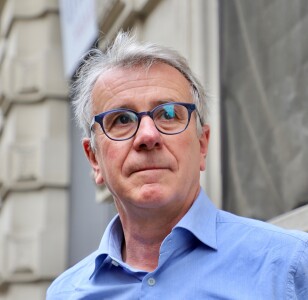
Massimo Tagliavini is Full Professor of Tree Physiology and Ecology at the Free University of Bozen-Bolzano, where he leads the Tree Ecophysiology and Ecosystems research group. He was faculty dean from 2008 to 2014 and is the author of over 200 scientific publications, editor of the journal Italus Hortus, past president of the Italian Society for Horticultural Science (SOI), and vice-president of Eurac Research.
Text: Valeria Dejaco