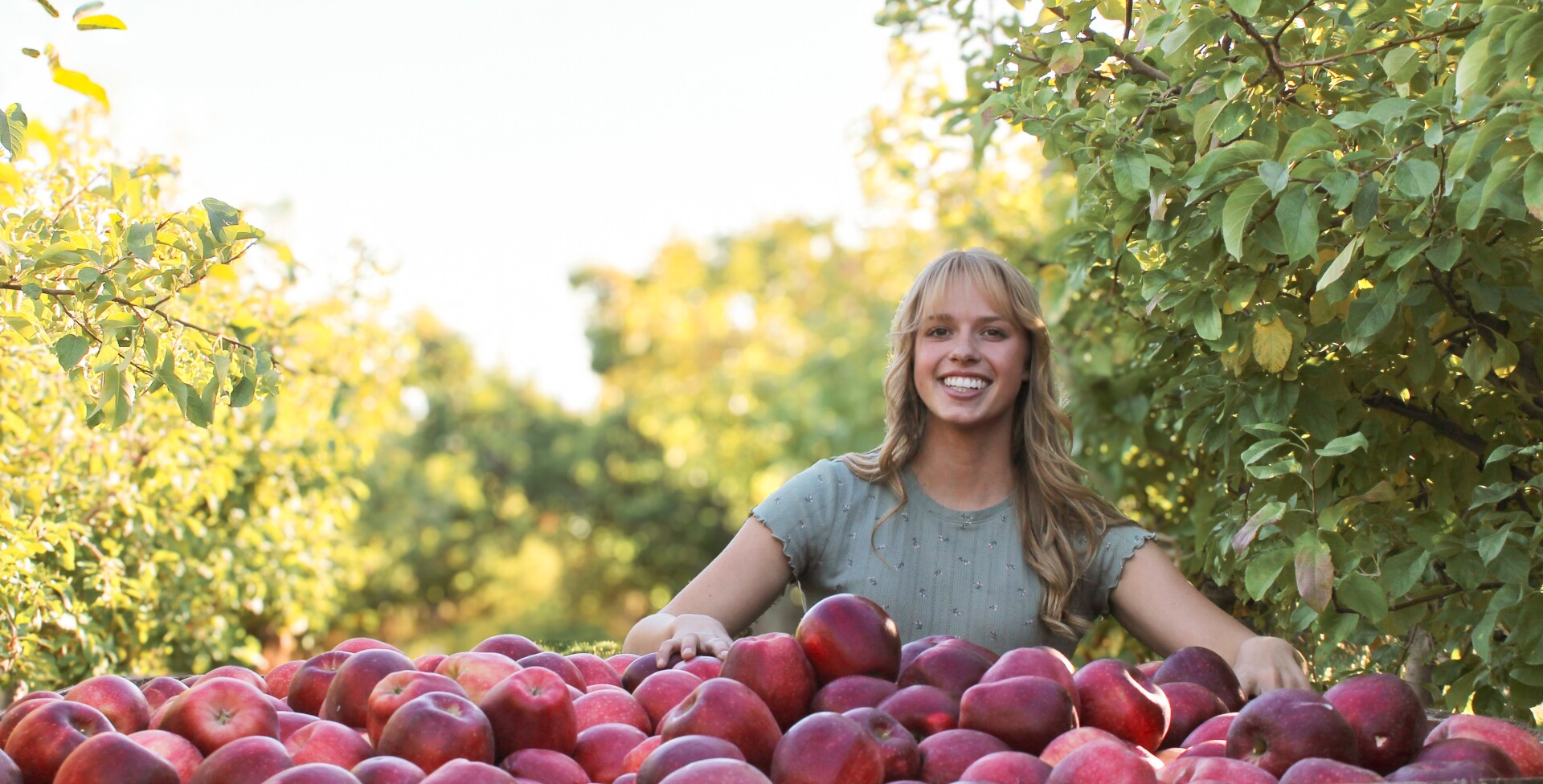
My videos end up on the pages of people that I would otherwise not reach.
Foto credits: Megan Brooks
Think of an apple icon. And it’s not the consumer electronics giant we’re referring to. Step forward Kait Thornton: a winningly fresh personality with deeprooted fruit farming experience, 275,000 followers on Instagram and 389,000 on TikTok.
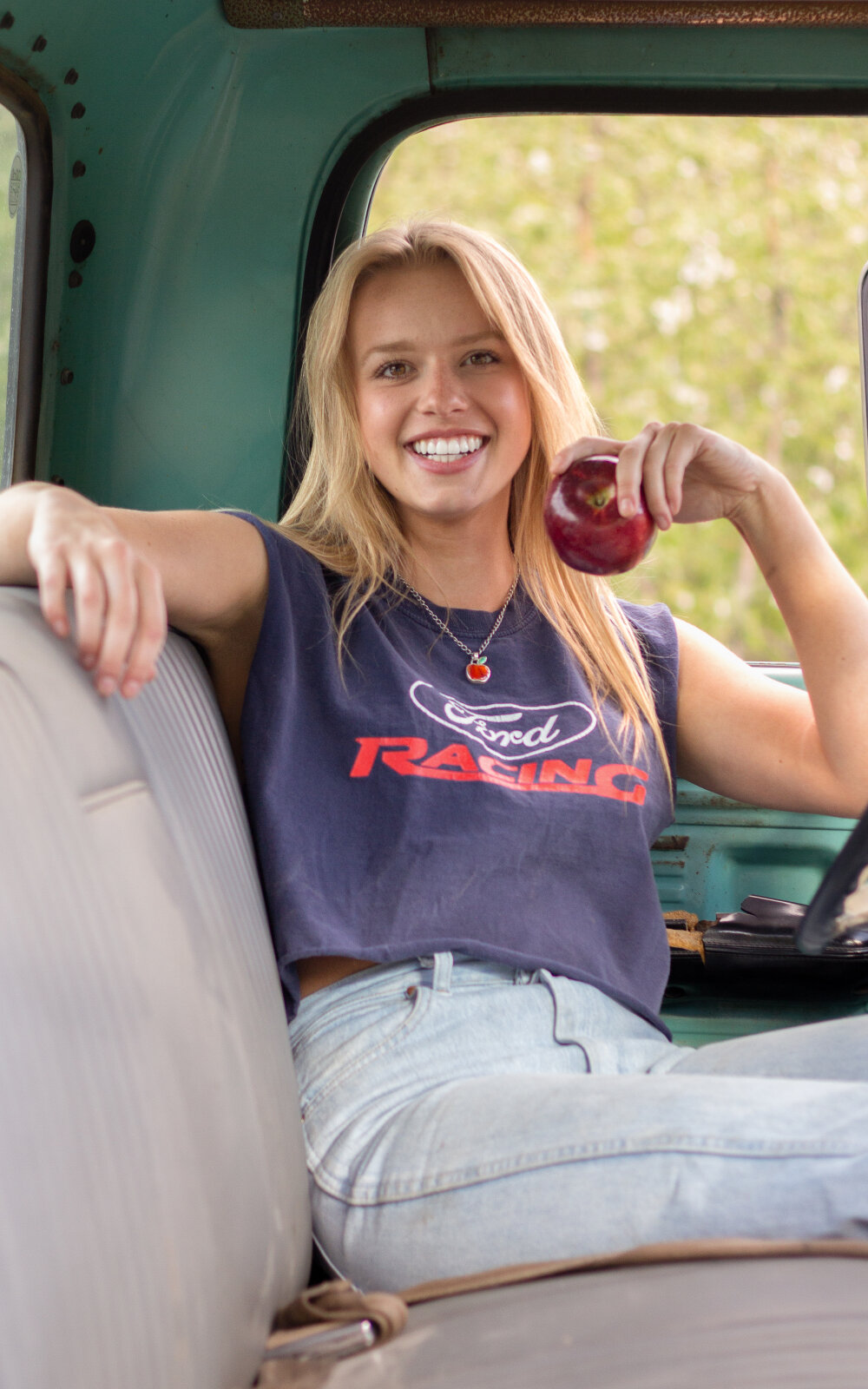
My videos end up on the pages of people that I would otherwise not reach.
Foto credits: Megan Brooks
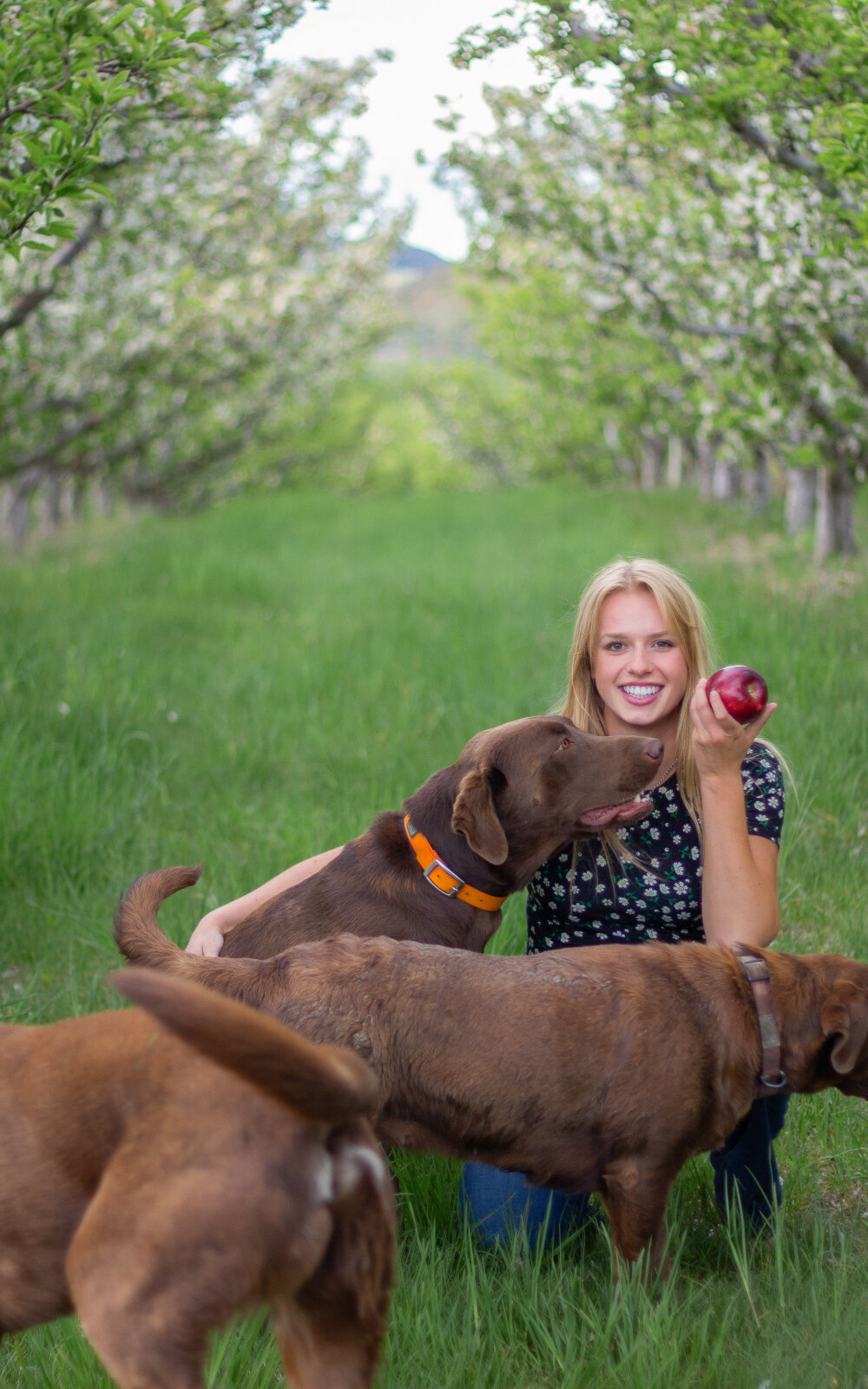
I want to help people understand how we nurture our trees and how our trees nurture us.
Foto credits: Megan Brooks
Barely out of her teens she was already known as the Apple Girl, and four years down the line the moniker almost seems reductive. Kait uses social media to explain what premium apple growing is really all about, attracting huge numbers of followers across the globe, making her the American apple icon of our times.
Kait was born and raised on her family’s fruit farm in Tonasket, Washington State, twenty minutes from the Canadian border. “My great grandparents started out in the 1920s farming 100 acres. After the war, my grandfather became a doctor, the only one in our area, and when he had some free time, he used to take his young son, my dad, to the farm. That’s where the passion was born”.
In due course the lack of a unified owner meant that the property was parcelled out among the many siblings. When Kait’s father Geoff started farming in the eighties he just owned the one little piece allotted to him. But he gradually built up from that, growing from 27 to over 440 operational acres – 10 to 178 hectares – and passing on his love of fruit farming to his daughter.
By the time Kait was in high school she started selling apples in the local community, packing boxes of rosy fruit on the pickup and trucking them to the agreed meeting place. She called them Kait’s Crates, using digital communication to spread the word. People loved them, both for the fruit and the interaction with such a sincere, enthusiastic young grower.
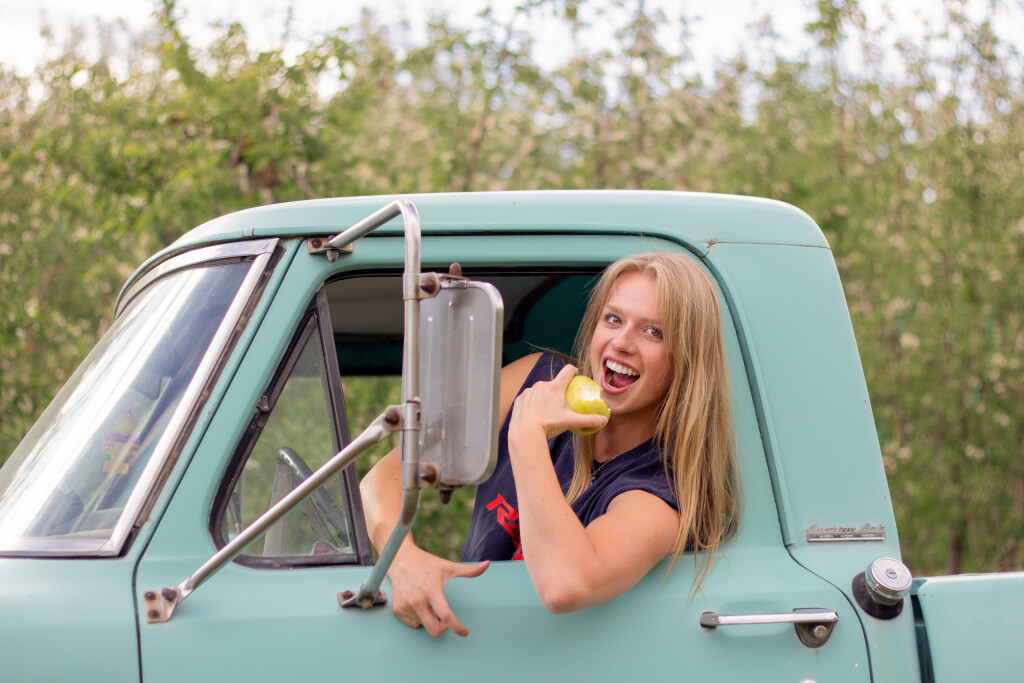
Foto credits: Megan Brooks
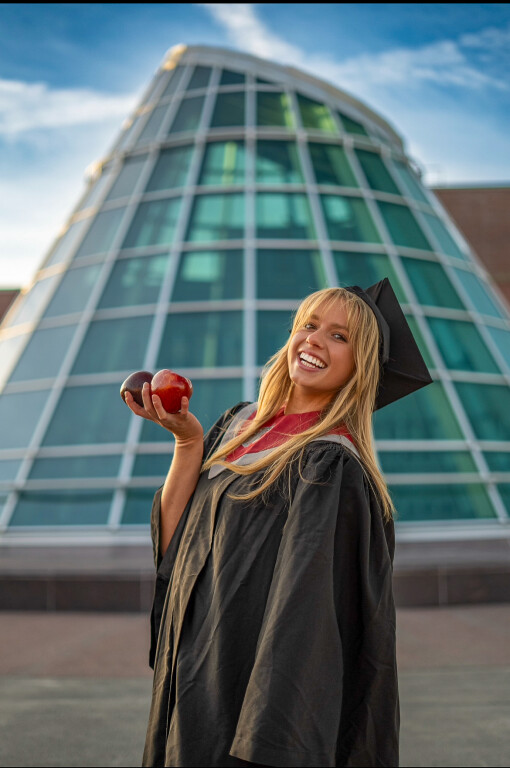
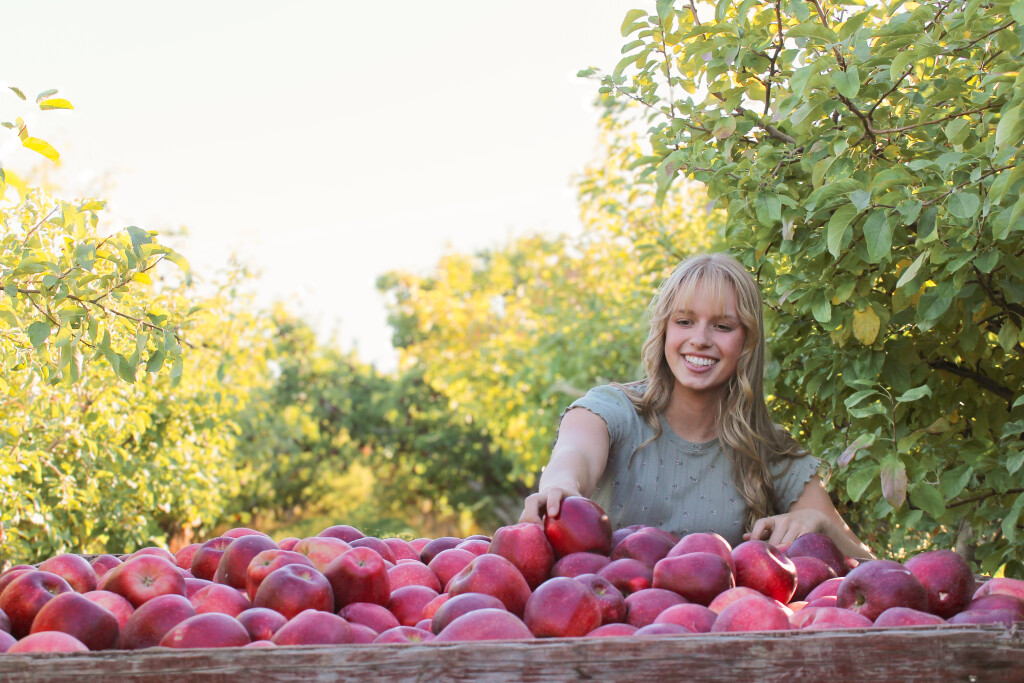
Kait’s videos on Instagram and TikTok showcase the progress in agriculture in her community, and the growers’ collective concern for the environment. “When our fruit leaves the farm, it goes into a warehouse and is sold under the same label as the produce from three hundred other families. At the end of the day, producing high quality apples that are going to store well and be a good eating experience is a team effort. Our neighbors share our care for orchard husbandry. Organic is great, but it’s a more expensive way to farm. Sustainability for us means staying in business. One of the first lessons that my dad ever taught us as kids is we need to be stewards of the land because we’re not just growing our produce right now, we’re also taking care of our orchards for when my kids will one day be running the farm”.
Fortunately in north central Washington, the warm sunny days and cooler evenings account for low humidity, and this contributes to the health of the trees, keeping apple scab at bay. Even with climate change, the Cascade Mountain Range helps protect the vast extension of orchards from serious damage. Kait is convinced that the quality of the fruit grown there is better able to withstand extreme conditions.
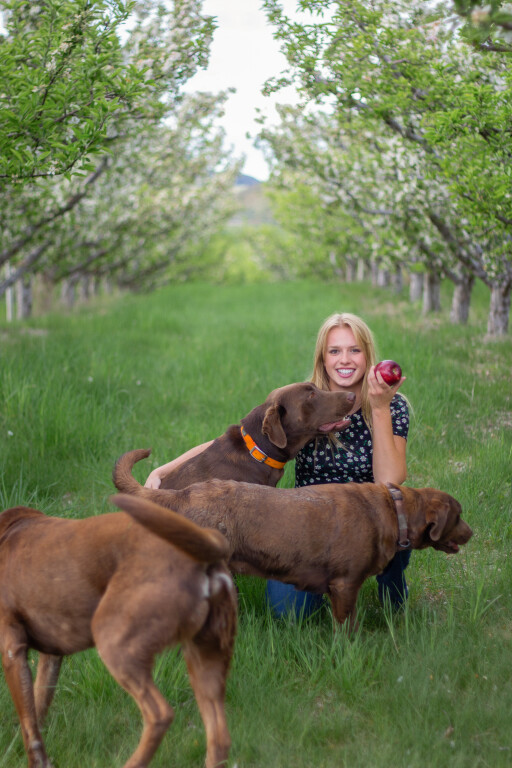
“One pest we do have to cope with is the codling moth, which apple farmers across the board are constantly battling. But we’ve started introducing sterile insect releases, which keep moth populations down significantly without using a ton of pesticides. Working closely with research departments at Washington State University has been very helpful.
They have field workers and test orchards all over the place. We’ve participated in some of those research studies, allowing them to use parts of our land to evaluate different cultivars. They’ve also pioneered new varieties, like Cosmic Crisp. We love it, and so do our customers”.
Kait’s handling of social media has helped her “show up in places that people don’t expect, and that’s where I’ve made important strides forward. My videos end up on the pages of people that I would otherwise not reach, and because my entire thing is apples and pears and farming, they see my passion and this leads to some cool collaboration”.
Foto credits: Megan Brooks
Because the population is so spread out in north Washington State, Kait appreciates that sheer distance would make farm visits for apple enthusiasts hard to organize. But with digital technology there’s great potential for interconnected apple tastings that take place at the same time in different venues. “It would be fantastic for people to be trying different varieties, in an educational format which is still a lot of fun. If you can keep it pretty simple and easy to understand for a lot of younger people, I think you generate a lot of interest”.
In coming years Kait would like to delve deeper into the impact of different fruits on the human digestive system, and share her findings with her followers. “I’ve always had an interest in nutrition. People seem to appreciate apples are healthy, but they don’t know why. They’re aware of the vitamin C and the antioxidants. But how does all that affect us? I would love to get a better grasp on how different fruits impact on our bodies, whether it’s apples or pears or cherries. I want to help people understand how we nurture our trees and how our trees nurture us”.
Text: Kate Singleton