Subscribe to our newsletter
With our free newsletter, you won't miss any news about Interpoma and the new ipoma Issue 04 Magazine.
Foto credits: Eurac Research | Martin Telser
Back in 2007, the Laimburg Research Center in South Tyrol made history by installing a photovoltaic system above apple trees – the first trial project of its kind in apple production anywhere in the world. Nearly two decades later, the research is still going strong. In fact, a brand-new installation, created as part of the SYMBIOSYST research project, has been collecting even more data since last year. Martin Thalheimer, head of the Soil, Fertilization, and Irrigation working group at the Laimburg Research Center, shares five of the key takeaways from the past 20 years.
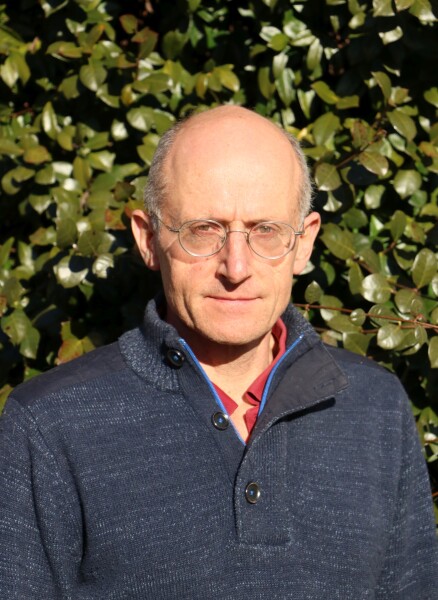
“Agrivoltaic systems can be built in many different ways, and from an agronomic perspective, too, there are various approaches to orchard design,” says Thalheimer. “Both the transparency of the solar panels and the choice of training system are important levers for managing the light that reaches the trees.” So, what is the best combination? That is exactly what the new agrivoltaic project at the Laimburg open-field research site, in operation since 2025, is set up to find out. The system uses two types of adjustable solar panels – with 10% and 35% light transmission – and two apple tree training systems: spindle and multileader.
Foto credits: Laimburg Research Centre/Agnese Martinelli
But isn’t shade from the solar panels bad for the trees? Not necessarily, says Thalheimer: “The panels can actually help prevent sunburn on the fruit, reduce pre-harvest fruit drop, and protect against infection pressure from fungal diseases.” Lower water use can be another big plus. Still, he cautions: “There are also examples of negative interactions in European pilot projects where agrivoltaics led to reductions in crop yields or end product quality.” It will take more research sites and several years of observation to fully understand how location, variety, and other factors play into the results, he adds.
“The main purpose of agrivoltaics systems is to provide farmers with an additional source of income through clean energy generation, while also delivering climate benefits,” explains Thalheimer. With this approach, growers can use the same land for both food production and renewable energy, reducing pressure on land availability and making land use more efficient. Lower water demand, less sunburn, and reduced fungal disease pressure can also help orchards manage the threats posed by the climate crisis. Moreover, the solar energy potential brings agriculture closer to electrification and reduces dependence on fossil fuels.
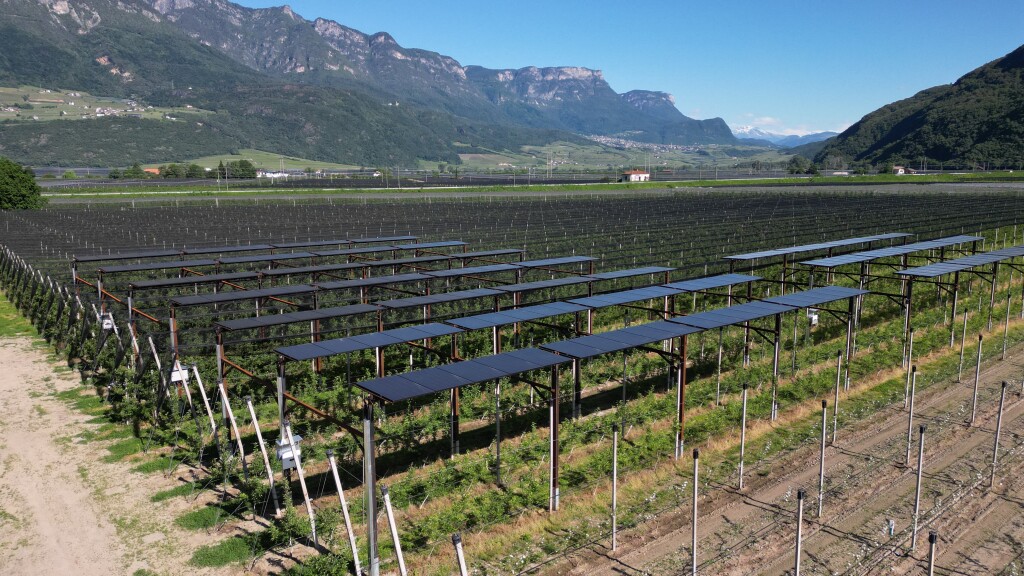
Foto credits: Eurac Research | Martin Telser
“At this point, the investment costs for agrivoltaic systems are still quite high, and the income from selling electricity is relatively low,” Thalheimer notes. “There are also often substantial site development costs on top of that. Agrivoltaics therefore makes the most economic sense for farms that have high energy needs that can be met by generating their own power. At the moment, we’re also looking for ways to make agrivoltaic systems more affordable by reducing upfront investment costs.” Possible solutions could include several farms making joint investments, or specialized companies leasing orchard land.
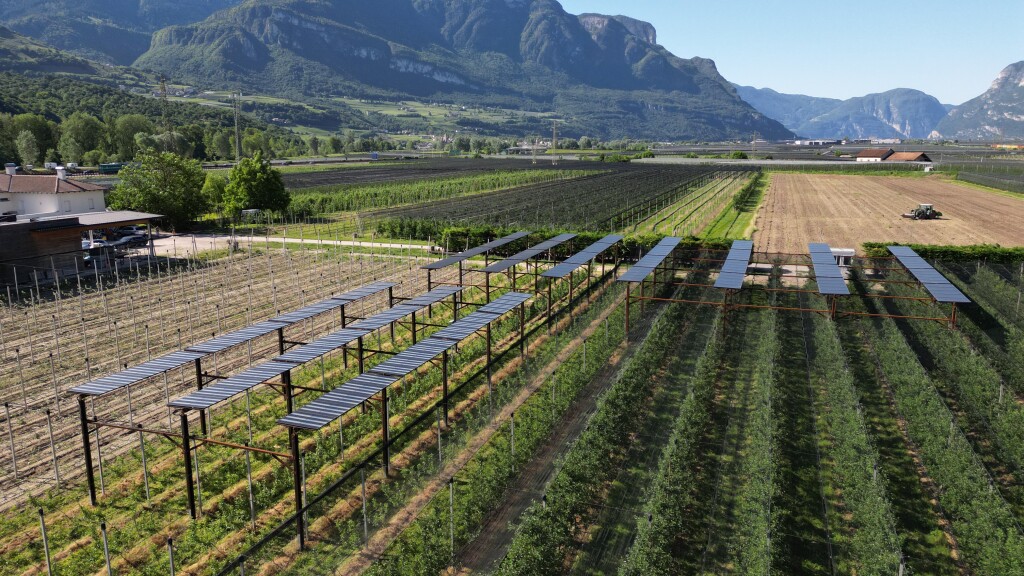
Foto credits: Eurac Research | Martin Telser
“Whether or not agrivoltaics takes off on a large scale really depends on the political and social framework, and any available incentives,” Thalheimer says. There is plenty of potential here: agrivoltaics could play an important role in helping Europe reach its renewable energy targets. But moving from promising pilot projects to a widely adoptable solution requires more research and innovation, with questions remaining about economic viability and long-term impacts on apple orchards. The next few years will need to identify the conditions under which agrivoltaics will deliver sustainable value for both growers and the energy transition.
Text: Daniela Kahler
The Horizon Europe research project SYMBIOSYST is exploring how to effectively combine agriculture with renewable energy generation. In South Tyrol, the project has operated an agrivoltaic pilot system above apple orchards since 2025, testing how different photovoltaic modules and orchard systems affect yield, fruit quality, water use, and energy production. The project is a collaboration between the Laimburg Research Center, Eurac Research, the South Tyrolean Farmers’ Association, and other national and international partners.